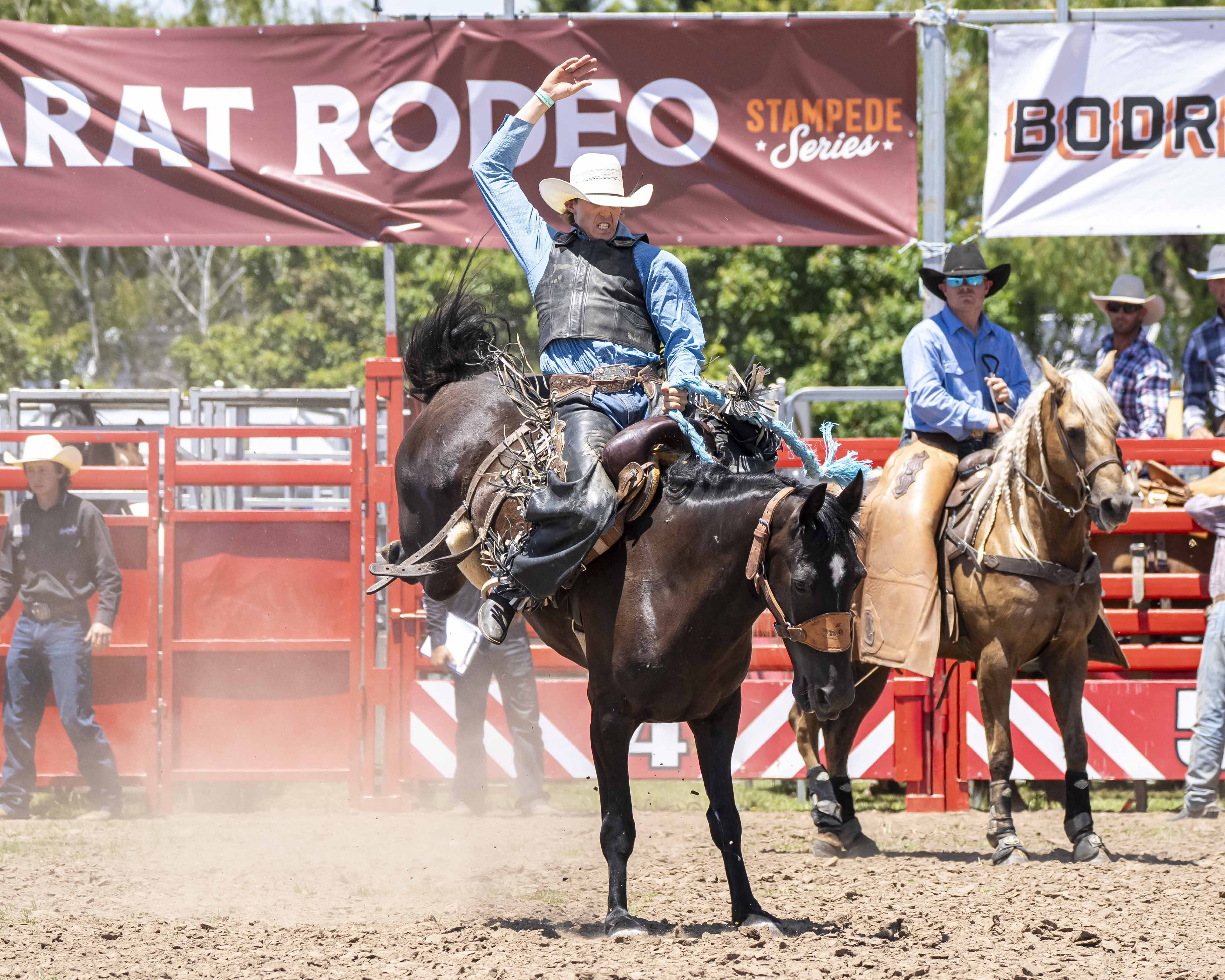
62,694 tickets. $4.1 million in gross ticket revenue. $13.60 back for every dollar spent on ads. Eleven rodeos across three states in eight months, six of them selling past their planned capacity, and a $12 million business valuation at the end of year one.
Those are the headline numbers from our partnership with National Rodeo Co. and the launch of the Stampede Series. We're proud of them, and they've been shared around plenty. But numbers on their own don't teach you anything. What matters is how they happened, because the way they happened is repeatable, and it's the same system we take every client through.
This is the long version.
Most of the campaigns you read about start with an advantage. An established brand, a loyal database, years of results to benchmark against. This one had none of that.
We partnered with National Rodeo Co. from day one. Before the Stampede Series existed, there was a small validation run of rodeos in regional Victoria at the end of 2024. Those events worked, confidence grew quickly, and the decision was made to take the brand national.
That decision created the exact situation most event businesses fear: a full season of events in markets the brand had never appeared in, with no audience to retarget and no historical data to lean on. Every ticket had to be earned, and there was nowhere to hide if the approach didn't work.
When you're building from nothing, the temptation is to do everything. New platforms, big swings, clever activations, all of it at once. We went the other way.
The core focus of year one was establishing the baseline. That's a fancy way of saying we did what needed to be done, well and consistently, across the key platforms. In our Signature System this is the first phase of the work: creating stability, clarity and repeatability, so marketing stops being reactive. It puts three things in place before anything else.
A repeatable campaign blueprint. Every event in the season was announced individually, and every campaign was a live test of the blueprint. How long is the sweet spot between announce and show date? What happens in each week of the campaign, and on which channel? What does the right budget look like, and how should it spread across the sales period? We executed, reviewed the results, refined the approach and went again. It only took a small handful of rodeos at the start of the season to land the formula.
One of the more valuable findings came from watching audiences across destinations: regional rodeos could and would draw from metro audiences in the same region, and metro events drew from the regions right back. That shaped how audiences were built for every market that followed, with each campaign compounding on the ones before it.
A small set of channels, run properly. The channel mix was deliberately narrow. Meta advertising as the primary engine, TikTok in a supporting role, and an organic content strategy running across social platforms underneath. Fewer channels, run properly and to a consistent standard, will beat a wide spread of half-run platforms every time. Nothing was set and forgotten.
Creative that earns attention. Creative is the biggest lever you can pull, so the early campaigns tested angles and formats until the highest performing creative mix emerged. Once it did, it was carried forward and refined event after event rather than reinvented from scratch each time.
None of this is glamorous. All of it is the reason the season worked.
Here's what the blueprint bought us: predictability.
Once the formula landed, sales followed a pattern we could see coming. Across the season, 41% of tickets sold in the final fortnight before each event. For most event owners that number is the stuff of sleepless nights. For this campaign it was simply the shape of the curve, planned for and resourced in advance, with budget deliberately weighted to the run home so there was fuel left when buyers were finally ready to move.
That's the real difference between guessing and knowing. When sales felt slow in the middle of a campaign, we knew they would come home strong, because the pattern was repeatable and the plan accounted for it. No panic spending, no knee-jerk discounting, no abandoning the strategy in week four. We reviewed the results after every single event, applied the learnings, and the blueprint got sharper each time.
The results tracked the system.
The Hunter Valley opener sold to 120% of its planned capacity and set the tone for everything after it. North Shore sold out on under $12,000 of media spend, at $2.20 of media cost per ticket. Brisbane closed the season at $901,000 in ticket revenue. In total, six of the eleven events sold past their planned capacity, and the season averaged $4.82 of media cost per ticket sold.
One discipline underneath those numbers deserves its own mention. Meta's own reporting only captured around half of the season's actual sales, which is common and worth knowing about your own campaigns. So every decision through the season was measured against real ticket revenue from the ticketing platform, never against what the pixel claimed credit for. When we say $13.60 back for every ad dollar, that's real money through the door.
Everything above describes what we did. It leaves out the thing that made it possible: a client willing to invest appropriately, from day one.
Appropriately doesn't mean extravagantly. It means the budget matched the ambition. National Rodeo Co. was aiming to launch a national event series in a single season, and they resourced the marketing like they meant it, committing roughly $302,000 in media across the season rather than drip-feeding spend and hoping.
Just as importantly, they invested in the right order. Money went into the unglamorous work first: clean tracking, database infrastructure, proper creative production, the full campaign arc mapped and funded through to the run home. And when campaigns hit the slow middle that every event experiences, they held their nerve and trusted the plan instead of cutting spend at exactly the wrong moment.
That's rarer than it should be. We meet plenty of event businesses who want season-two results on a validation-run budget, or who fund the announce and starve the run home. The maths of this season is the counterargument: every dollar invested in ads came back as $13.60 in ticket revenue. The willingness to invest wasn't a cost of the result. It was a cause of it.
With the foundation established and repeatable, the plan for season two was the next phase of the same system: turning ticket buyers into a genuinely engaged audience.
By the end of season one, the series had built a database of 25,673 customers and a rapidly growing social following. When you run events, people will throw you a follow or join your mailing list when they buy a ticket. Turning that initial interest into genuine engagement is another job entirely, and that's where the focus was shifting: deeper connection with the communities around each event, so the audience itself becomes an asset that compounds between seasons.
This is the pathway we guide every client through. First get the business on solid ground, then move on to the creative work that takes it to the next level. Solid ground first, then the fun stuff.
Season two went a different way, and it's a bittersweet ending from where we sit. Off the back of its first-year performance, National Rodeo Co. reached a $12 million business valuation, and marketing moved in-house as part of the company's next chapter. Losing a client because the work made them too valuable is the best possible reason to finish up with one.
You don't need to be selling 62,000 tickets for any of this to apply. The system that carried the Stampede Series is the same one we run for festivals, venues, tours and event series of every size, and it always starts in the same place: a blueprint, a small set of channels run properly, creative that earns attention, and a budget mapped honestly across the whole campaign.
If your marketing currently runs on memory and effort, or every event still feels like a first event, that's the gap worth closing before your next announce.
Book a free game plan call with us and we'll talk through where your foundations are at, and what building your own version of this system would look like.
Join our mailing list for all the free tips & value bombs. We put together a regular digest of only the most current and valuable digital marketing news, insider secrets and social media algorithm updates so you never miss a beat in the online world again!






.jpg)


